
Part 23, Classic WSJ Art
( To view the initial Post in this series, please click on https://www.sprouls.com/ink-rhythm-blog/classic-wall-street-journal-art )
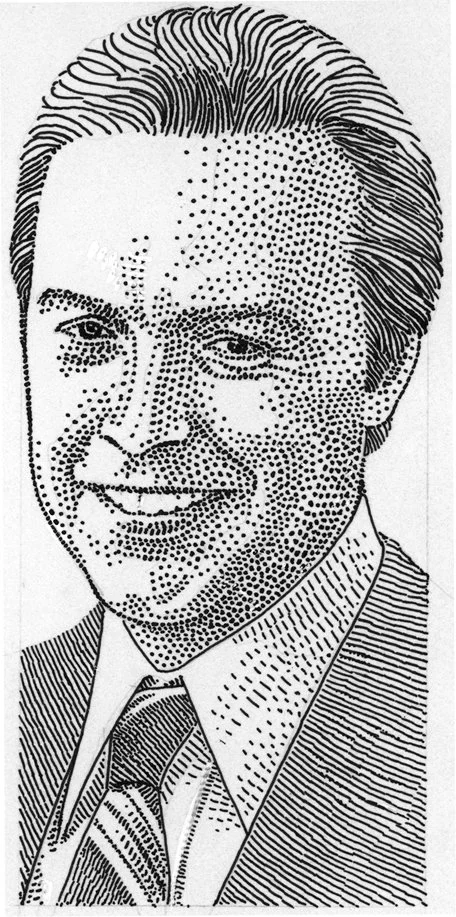
Let’s start with a very early hedcut (portrait) illustration. Here is Michael R. Quinlan, an exec at McDonald’s corporation:
WSJ Hedcut
In the early days, I preferred keeping the portraits fairly deep in the vertical dimension. Consequently, the classic hedcut became shallower, focusing on the face… makes sense. Note the coarse marks making up the details of the face. The lapels, and hair are loosely rendered, interestingly. The established, celebrated hedcut “style” had yet to be arrived at! This example might even be from before my tenure at The Journal, when I was working as a freelancer illustrator. In this period, I was making portraits for my colleague, Front Page Editor Glyn Mapes.
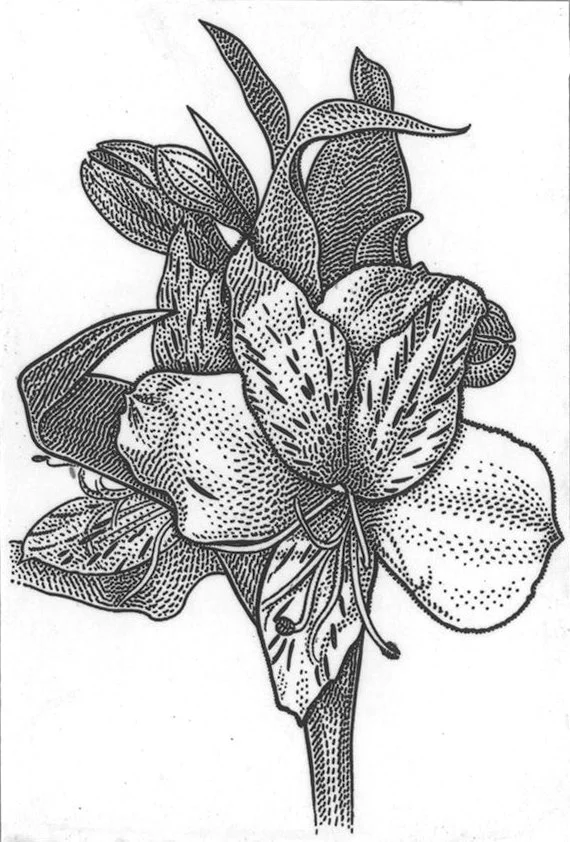
Next, a half-column illustration of a Tiger Lily…
At The Wall Street Journal of that day, you could always find something different and interesting. Take, for example, this unusual drawing of a typical American family. They’re watching… something!
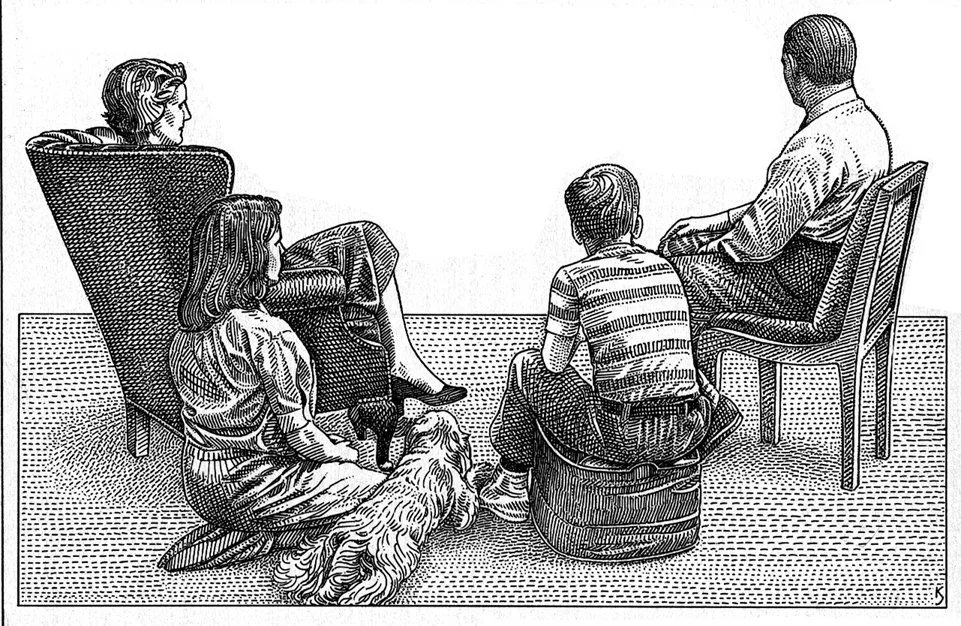
I assume this illustration accompanied an article on the Neilsen Ratings , that reported on television viewership of the day. My abbreviated signature is on the bottom right. Pretty certain this would have appeared as a two-column image in Section Two, which utilized more, and larger illustrated images — not photography! The newspaper’s policy in those days banning the use of photography kept a lot of illustrators busy and gainfully employed.
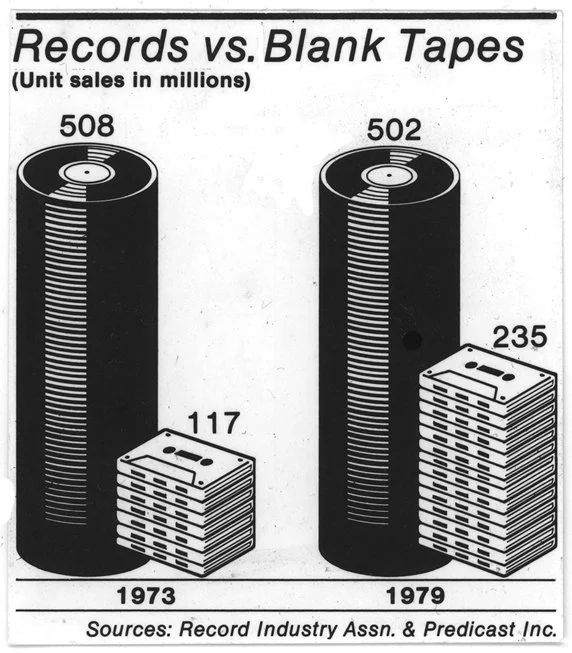
I made the above chart measuring the sales of records to audio tapes pretty early in my years at The Journal. It ran as a one-column info-graphic, likely on Page One.
Lastly, a rather elaborate composition to illustrate the fear many managerial types experienced as they faced the uncertain prospects of the approaching technical revolution…
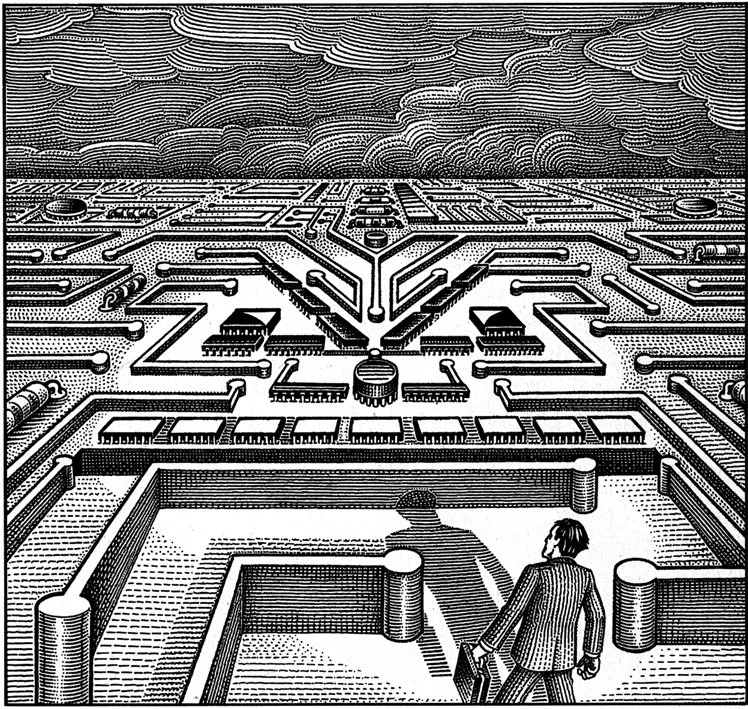
This piece I dubbed “Techno - Fright” — somewhat on the Wild Side for The Wall Street Journal. It appeared in Section Two.
More next week…